
Can Mesh Belt Tempering Furnace Be Used for Brazing?
If you’ve ever wandered through a metalworking shop – the kind with the hum of machinery, the smell of heated steel, and technicians checking parts with calipers – you’ve probably seen furnaces of all shapes and sizes doing their work. As a Mesh Belt Tempering Furnace supplier, one of the most common questions I get from customers is this: Can the mesh belt tempering furnace I rely on for heat treatment actually handle brazing, too? It’s a fair question. Brazing is a critical process for joining metal parts in industries ranging from automotive to aerospace, and being able to use existing equipment for multiple jobs can save shops time, space, and money. But the answer isn’t a simple “yes” or “no” – it’s about understanding what both processes require, how the mesh belt tempering furnace is built, and whether the two can align.
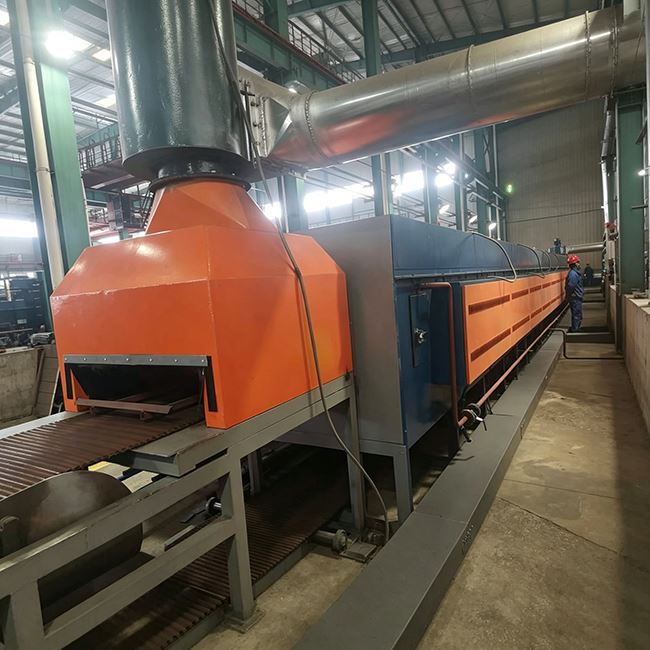
First, let’s break down what each process entails, because that’s where the confusion starts. Tempering (what our mesh belt tempering furnace is designed for) is a heat treatment process used to reduce brittleness in hardened steel. Typically, parts are first quenched (rapidly cooled) to make them hard, then reheated to a lower temperature (usually 150°C to 650°C, depending on the steel grade) to balance hardness and toughness. The mesh belt in these furnaces is designed to carry parts through a controlled atmosphere – often air, nitrogen, or even argon – at a consistent, slow pace, ensuring uniform heating. The belt itself is made of high-temperature alloy wire, woven in a mesh pattern that lets heat circulate around parts without sagging under load.
Brazing, on the other hand, is a joining process where two metal parts are fused together by a filler metal (called brazing alloy) that melts at a temperature above 450°C but below the melting point of the base metals. The key here is that the base metals don’t melt – the filler metal flows into the joint via capillary action, creating a strong, permanent bond. Brazing is used for everything from joining brake lines in cars to assembling heat exchangers for HVAC systems. The atmosphere for brazing matters a lot too: if the base metals oxidize while heating, the filler metal won’t flow properly, so many brazing processes use protective atmospheres (like pure nitrogen or hydrogen) or require flux to prevent oxidation.
So, can these two processes share a furnace? The short answer is: sometimes, but it depends on the type of brazing you’re doing and how your mesh belt tempering furnace is configured. Let’s start with the similarities that make this possible. Both tempering and brazing require controlled heating at precise temperatures. A well-maintained mesh belt tempering furnace has temperature zones that can be set and held to within a few degrees, which is exactly what brazing needs. The controlled atmosphere capability – a standard feature on many of our mesh belt models – is also a plus. For example, if you’re doing low-temperature brazing (say, with a filler metal that melts at 600°C) on parts that don’t mind being in a nitrogen atmosphere, you might be able to run that brazing job in a furnace that’s normally used for tempering.
But here’s where the line gets blurry. Tempering temperatures are generally lower than the minimum brazing temperature (450°C), so if you’re doing high-temperature brazing (up to 1200°C for some alloys), a standard mesh belt tempering furnace might not be built to handle that heat. The mesh belt itself is rated for a maximum operating temperature – most of our standard mesh belt tempering furnaces top out around 1100°C, which works for many common brazing alloys like bronze or copper-silver. But if you need to braze with a higher-melting filler metal, you’ll need a furnace with higher-temperature heating elements and a belt rated for that heat – that’s not a standard tempering furnace, though some of our custom models can be adjusted.
Atmosphere is another big factor. Let’s say you’re brazing stainless steel parts that are prone to oxidation. Tempering furnaces that use air as an atmosphere won’t work for brazing in this case – air has oxygen, which will cause the base metals to oxidize before the filler metal can flow. But our mesh belt tempering furnaces that are equipped with inert gas or controlled atmosphere systems can work for some brazing applications. Just keep in mind: brazing atmospheres often need to be more pure than what’s used for tempering. Tempering might use a slightly diluted nitrogen mix, but brazing often requires 99.9% pure nitrogen or even cracked ammonia. If your current tempering furnace can produce that, great – if not, you might need to add an atmosphere generator, which is an extra step.
One of the biggest advantages of using a mesh belt tempering furnace for brazing is the continuous operation. Unlike batch furnaces (which load parts in once batches), mesh belt furnaces are linear, so parts move through the furnace one after another. That’s perfect for high-volume brazing jobs, like small parts for automotive components. You can set the belt speed, temperature, and atmosphere once, and run parts 24/7, just like you do for tempering. That’s a huge time-saver for shops that need to balance multiple high-volume processes without adding more equipment.
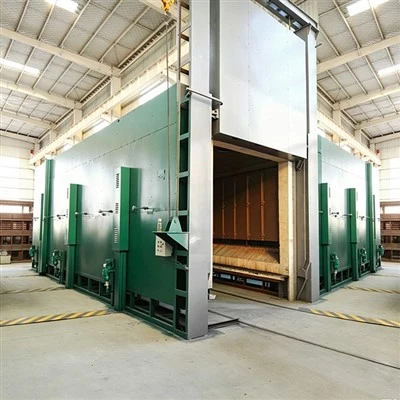
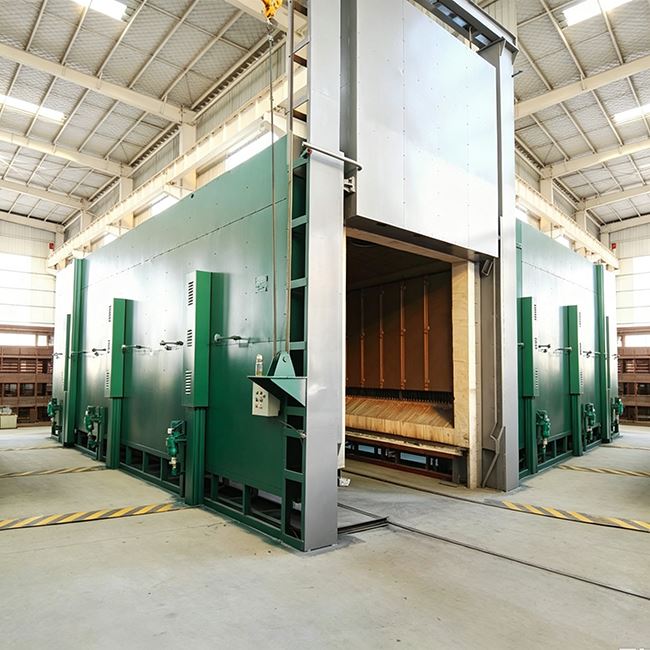
But there are limits. Let’s talk about part size and geometry. Mesh belt furnaces have a maximum load capacity and part size – the belt is only so wide, and the heating chambers are a set length. If you’re brazing large, bulky parts, like a heat exchanger for a truck, a mesh belt tempering furnace might not have the space to handle those. In that case, you might want to look at other furnace types, like the Trolley Type Tempering Furnace, which is designed for large, heavy parts that can’t be run through a continuous mesh belt. Trolley furnaces are batch-style, so you load the entire part onto a trolley and wheel it into the furnace, which is better for one-off or large-scale jobs. Similarly, if you need to braze very small, precise parts that could fall through the mesh belt, a mesh furnace might not be ideal – parts could get trapped in the weave, or the mesh might rub against the filler metal and cause contamination. That’s where a different continuous furnace, like a roller hearth, might work, but that’s outside the mesh belt category.
Another consideration is post-brazing processing. Tempering is usually the final step after hardening, but brazing is often followed by cleaning, finishing, or even another heat treatment. If you use your mesh belt furnace for both, you need to make sure that the residues from brazing (like excess filler metal or flux) don’t contaminate the furnace for future tempering jobs. Flux, in particular, can leave a sticky, corrosive residue that builds up on the belt and heating elements over time. If you do plan to alternate between brazing and tempering in the same mesh belt furnace, you’ll need to have a strict cleaning schedule – maybe a dedicated cycle with a high-temperature air purge to burn off flux residues, and regular belt inspections. For shops that only do occasional brazing, this might be manageable, but for shops that do both processes daily, it’s probably better to have separate furnaces to avoid cross-contamination.
I’ve seen this play out with a customer of mine – a small automotive parts shop that was using our mesh belt tempering furnace for tempering valve stems and connecting rods. They had a small, high-volume job to braze brake line fittings, and they tried using their existing mesh furnace to do it. At first, it worked great – the fittings were small, low-temperature brazing, and the controlled nitrogen atmosphere was perfect. They saved money by not renting or buying a separate brazing furnace. But after a few months, the flux from the brazing job started building up on the belt. It made the mesh sag in some spots, and when they went back to tempering connecting rods, the residues left marks on the steel that required extra grinding and rework. They ended up investing in a separate mesh belt furnace dedicated to brazing, and kept their original for tempering only. That’s a common scenario – using a multi-purpose furnace works for a while, but when production scales, having dedicated equipment pays off.
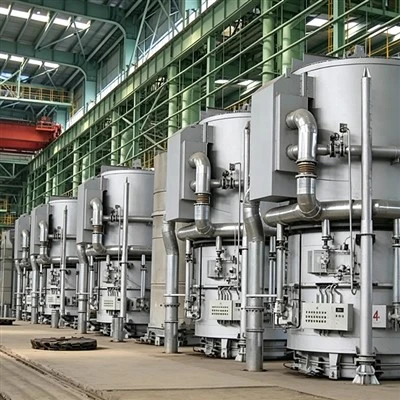
What about other furnace types, just to put this in perspective? If your shop does mostly large, low-volume brazing, the Pit Type Tempering Furnace is a better fit. Pit furnaces are vertical, batch-style furnaces that are loaded from the top, so they’re great for parts that are too tall for mesh belt or trolley furnaces. They also use controlled atmospheres, so they can handle brazing, but again, they’re batch, not continuous. Each furnace type has its sweet spot – mesh belt is for continuous, high-volume, medium-sized parts; trolley is for large, heavy parts; pit is for tall, batch parts.
Now, as a Mesh Belt Tempering Furnace supplier, I’ll be honest: I recommend using a dedicated furnace for each process if your budget and shop space allow. Brazing requires precise control over filler metal flow and atmosphere, and cross-contamination between tempering and brazing jobs can lead to defects that cost time and money. But that doesn’t mean you can’t use a mesh belt tempering furnace for brazing in a pinch – or for small, specific jobs that align with your existing equipment. The key is to assess:
-
Your brazing temperature: Is it below the maximum rating of your mesh belt furnace? Most standard mesh belt furnaces can handle up to 1100°C, which covers 90% of common brazing applications.
-
Your atmosphere needs: Can your furnace supply the pure, controlled atmosphere required for brazing? If your tempering furnace uses air, you’ll need to add an inert gas system to prevent oxidation during brazing.
-
Part size and volume: Are your parts small enough to fit on the mesh belt, and is your production volume high enough to justify continuous operation? If you need to braze large parts, stick to a trolley or pit furnace instead.
-
Contamination risk: Can you commit to cleaning the furnace thoroughly between tempering and brazing jobs? If not, a dedicated furnace will save you from headaches down the line.
Another thing to consider is the mesh belt material. Most mesh belt tempering furnaces use stainless steel or high-temperature alloy belts like Inconel. Stainless steel belts work for lower-temperature brazing (up to 800°C), while Inconel belts can handle higher temperatures up to 1100°C. If your brazing job is at the higher end of that range, make sure your belt is made of the right alloy – that’s a retrofit we can do for existing customers, if needed.
I’ve also worked with customers who modify their mesh belt furnaces for brazing. They install additional atmosphere sensors to monitor oxygen levels more closely, add exhaust systems to handle brazing fumes, and adjust the belt speed to match the time required for the filler metal to flow. These modifications are doable, but they come with costs, so it’s important to weigh that against the price of a dedicated brazing furnace. For small shops that are just testing the brazing waters, a modified mesh belt tempering furnace is a great way to start. For larger shops that do brazing as a core process, dedicated equipment will be more efficient in the long run.
At the end of the day, the question isn’t “can you use a mesh belt tempering furnace for brazing” – it’s “should you?” It depends on your specific operations, your budget, and your quality requirements. If you’re a high-volume shop making small, medium-temperature brazed parts with controlled atmosphere needs, a mesh belt furnace can work. If you’re doing large, high-temperature brazing on a batch basis, you’ll be better off with a different furnace type.
As a supplier, my goal isn’t just to sell you a furnace – it’s to help you choose the right equipment for your needs. If you’re wondering whether your mesh belt tempering furnace can be adapted for brazing, or if you’re in the market for a furnace dedicated to brazing or tempering, I’m here to help. We offer custom solutions for modifying existing mesh belt furnaces, as well as new Mesh Belt Tempering Furnace models designed for both tempering and select brazing applications, not to mention Trolley Type Tempering Furnace and Pit Type Tempering Furnace for other specialized jobs. Whether you’re a small startup or a large established manufacturer, we can walk you through the pros and cons, run temperature and atmosphere tests, and find the solution that works for your production goals.
Don’t let equipment limitations hold your shop back from expanding your services to include brazing. The key is to do your research, assess your specific requirements, and work with a supplier who understands both tempering and brazing processes – that way, you’ll make an investment that pays off in efficiency, quality, and long-term value.
References
- ASM International. (2005). Brazing and Soldering. ASM Handbook, Volume 6: Welding, Brazing, and Soldering.
- Taylor, B. (2018). Controlled Atmosphere Furnaces for Heat Treatment and Joining. Industrial Heating Magazine.
- DIN Standards Committee. (2020). Furnaces for Heat Treatment – Mesh Belt Furnaces – Specifications and Test Methods. DIN 17052-3.
- Metal Treating Institute. (2021). “Multi-Purpose Furnace Operation: Balancing Heat Treatment and Joining Processes.” MTI Technical Bulletin No. 2021-04.