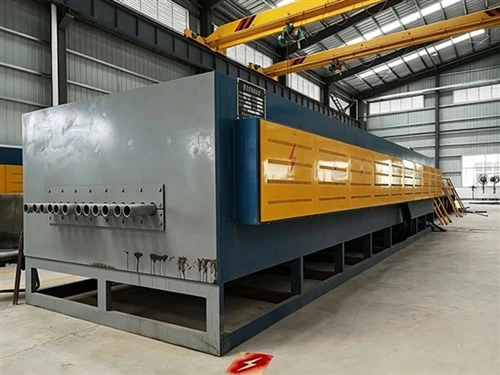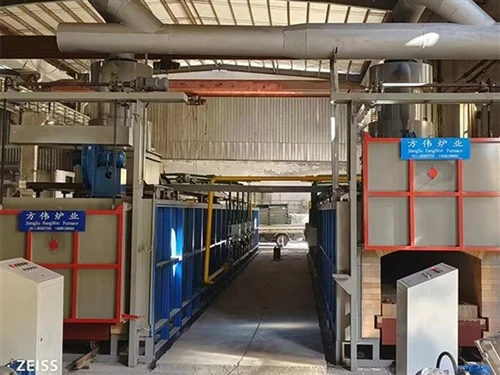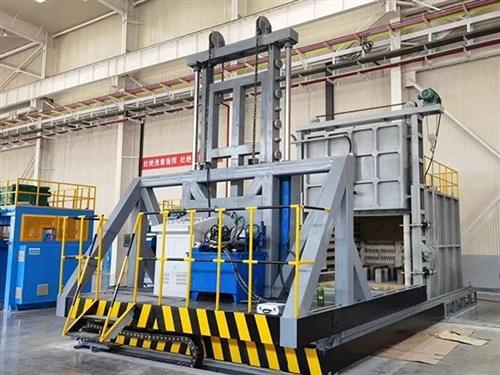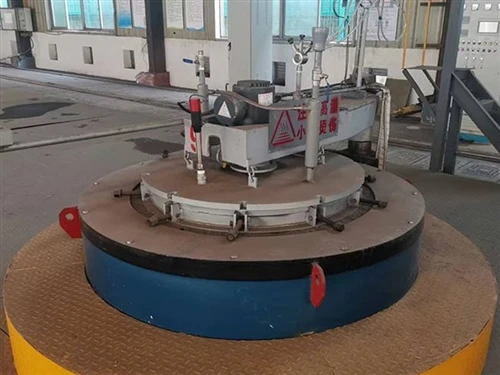
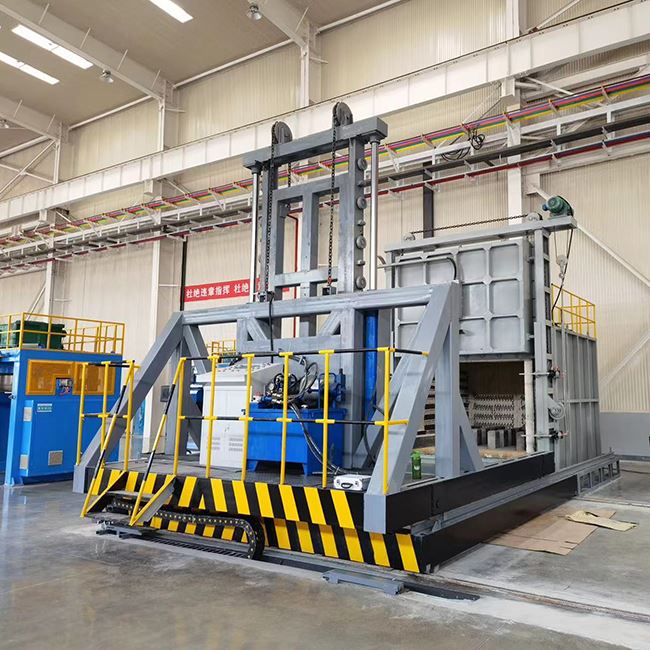
A bell-type furnace is a common piece of industrial heating equipment primarily used for heat treatment processes-such as annealing and quenching-on metal materials. It features a relatively simple structure and is easy to operate, making it suitable for the heat treatment of small to medium-sized workpieces. Typically composed of a furnace body, heating elements, and a control system, the bell-type furnace can meet the heating requirements of various materials.
1.Basic Structure of a Bell-Type Furnace
The main components of a bell-type furnace include the furnace shell, furnace lining, heating elements, furnace cover (bell), and control system. The furnace shell is usually constructed from welded steel plate and lined with refractory material to minimize heat loss. Depending on the specific furnace model, heat is generated using resistance wires, silicon carbide rods, or gas burners. The furnace cover is designed to be movable, facilitating the loading and unloading of workpieces. The control system regulates the internal temperature to ensure the stability of the heating process.
2. Working Principle of a Bell-Type Furnace
A bell-type furnace generates heat via its heating elements, raising the temperature inside the chamber. Workpieces placed within the chamber are heated as heat is transferred to their surfaces through radiation and convection, then gradually conducted to the interior, resulting in uniform heating. Because the furnace cover can be sealed, the internal atmosphere is controllable, making the furnace suitable for processes requiring a protective atmosphere or a vacuum environment.
3. Main Types of Bell-Type Furnaces
Based on heating methods and applications, bell-type furnaces can be categorized as follows:
-Resistance-heated bell-type furnace: Uses resistance wires or strips for heating; offers precise temperature control and is suitable for the heat treatment of small to medium-sized workpieces.
-Gas-fired bell-type furnace: Uses natural gas or liquefied gas as fuel; offers rapid heating and is suitable for high-volume production.
-Vacuum bell-type furnace: Operates under a vacuum or with an inert gas fill to prevent workpiece oxidation; suitable for processing high-precision materials.
4. Application Areas of Bell-Type Furnaces
Bell-type furnaces are widely used in industries such as metal processing, machinery manufacturing, and electronic component production. Specific applications include:
-Heat treatment processes for steel, including annealing, normalizing, and quenching.
-Softening treatment for non-ferrous metals such as copper and aluminum.
-Sintering and packaging of electronic components.
-Drying and sintering of ceramic materials.
5. Advantages and Disadvantages of Bell-Type Furnaces
-Advantages:
-Simple structure and easy maintenance. - Uniform heating ensures effective heat distribution across the workpiece.
- The furnace atmosphere can be adjusted according to process requirements.
- Disadvantages:
- Slower heating rate; not suitable for extremely large workpieces.
- High energy consumption, leading to significant long-term operating costs.
6. Key Considerations for Selecting a Bell-Type Furnace
When selecting a bell-type furnace, consider the following:
- Heating method: Choose between electric resistance heating and gas heating based on process requirements.
- Temperature range: Different materials require different processing temperatures; ensure the furnace can meet the necessary operating temperature.
- Furnace chamber size: Select an appropriate chamber volume based on workpiece dimensions.
- Control system: Furnaces with a high degree of automation can improve production efficiency and stability.
7. Routine Maintenance of Bell-Type Furnaces
To ensure long-term, stable operation, perform the following maintenance regularly:
- Inspect heating elements for aging or damage and replace them promptly.
- Clean scale and impurities from the furnace chamber to avoid compromising heating performance.
- Regularly calibrate the temperature control system to ensure accurate temperature measurement.
- Check the furnace body's sealing to prevent heat loss.
8. Economic Analysis of Bell-Type Furnaces
Initial investment costs vary by model and functionality, typically ranging from tens of thousands to hundreds of thousands of RMB. Operating costs primarily include electricity or gas expenses and maintenance fees. Compared to continuous furnaces, bell-type furnaces are better suited for small-batch, multi-variety production models, offering flexibility to meet diverse process requirements.
9. Future Development Trends
With advancements in industrial technology, there is still room for improvement in the energy efficiency and intelligence of bell-type furnaces. Potential future developments include:
- Adopting more efficient heating technologies to reduce energy consumption.
- Integrating intelligent temperature control systems to achieve automated production.
- Optimizing the furnace structure to improve heat utilization efficiency.
In summary, as a vital piece of industrial heating equipment, the bell-type furnace plays a significant role in sectors such as metal processing and electronics manufacturing. Selecting the right model and performing proper routine maintenance can effectively enhance production efficiency and product quality.