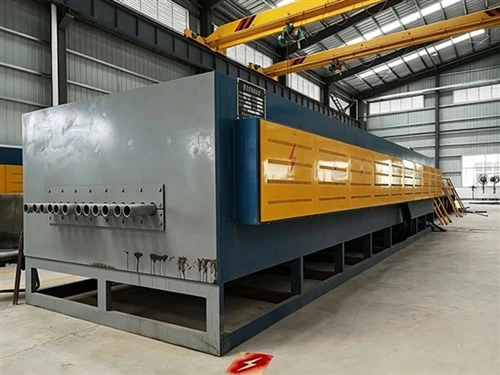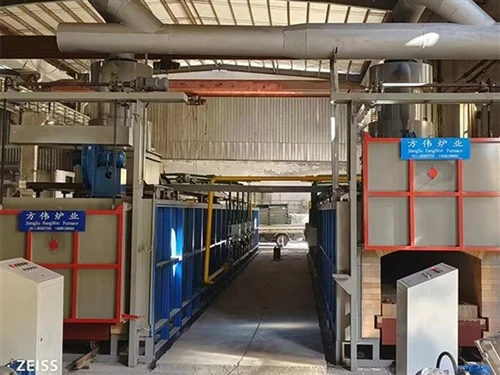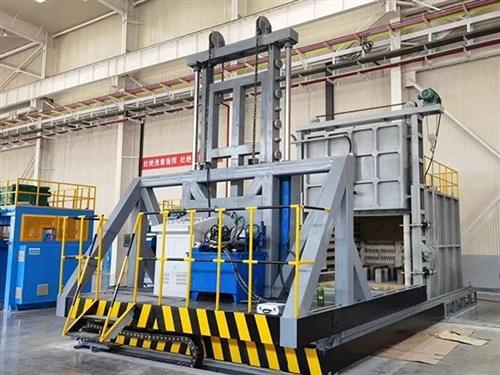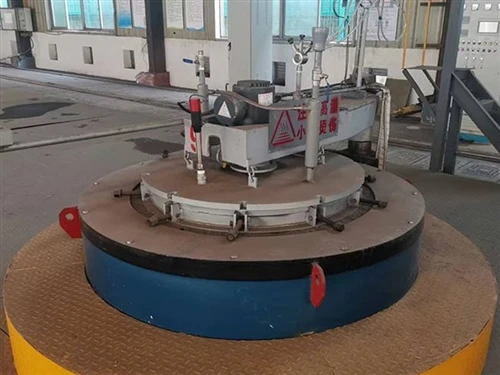
A carburizing furnace is a new type of energy-efficient, batch-operation electric heat treatment furnace. It utilizes either fuel combustion (oil or gas) or electric heating as its heat source. Primarily used for the surface carburizing of metal components, it allows for precise control of carbon penetration to enhance surface hardness, wear resistance, and corrosion resistance while maintaining core toughness; it is suitable for heat treatment processes in the metallurgical and machinery manufacturing sectors. These furnaces are categorized into batch types (such as pit furnaces and horizontal furnaces) and continuous types (such as pusher furnaces, rotary drum furnaces, vibrating hearth furnaces, and mesh belt furnaces). Notably, the pusher furnace features four temperature-controlled zones: heating, carburizing, diffusion, and cooling.
The furnace consists of a shell, lining, retort (muffle), and heating elements, utilizing energy-efficient ceramic fiber or aluminum silicate fiber for the lining. The retort is constructed from high-temperature resistant alloys-such as Cr18Ni25Si2-to withstand high-temperature oxidation and carburization, offering a service life more than three times that of standard materials. Key performance indicators include furnace temperature uniformity (±5°C), temperature control precision (±1°C), and the empty-furnace heating-up time; resistance wires serve as the heating elements. Vacuum carburizing technology achieves carbon concentration control by using methanol as a carrier gas and acetone or propane as an enriching gas, enabling a carburized layer depth precision of ±0.01 mm. Safety measures include nitrogen purging, furnace pressure interlock protection, and an over-temperature power-cutoff mechanism.
Vacuum carburizing is one of the most advanced heat treatment methods globally and represents a rapidly developing technology in the field. Compared to traditional carburizing methods, vacuum carburizing offers precise carbon content control, resulting in superior carburized layer uniformity and surface quality. Additionally, it offers advantages such as energy efficiency and environmental friendliness, leading to its widespread application in the automotive, machinery, and aerospace industries.
Metrics such as furnace temperature uniformity and empty-furnace heating-up time are primary indicators of a vacuum furnace's heating performance. These metrics are largely determined by the structure of the heating chamber-the furnace's core component-and the soundness of its design directly impacts operational performance and production efficiency.
There are two options for the heat source of the carburizing furnace. One type utilizes fuel combustion for heating-using either liquid fuel or gas-while the other is electrically heated.
Carburizing furnaces come in two varieties: batch-type and continuous-type. The choice between them is determined by comparing various factors, such as production volume, product variety, workpiece dimensions and shape, carburized case depth, and costs related to investment and management.