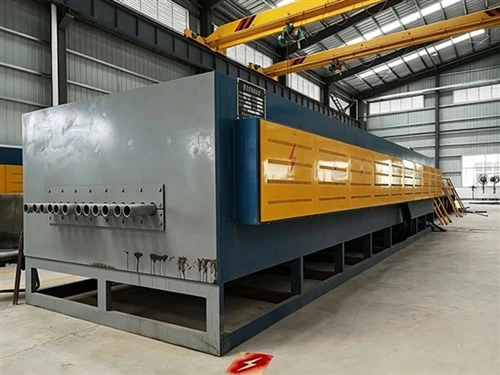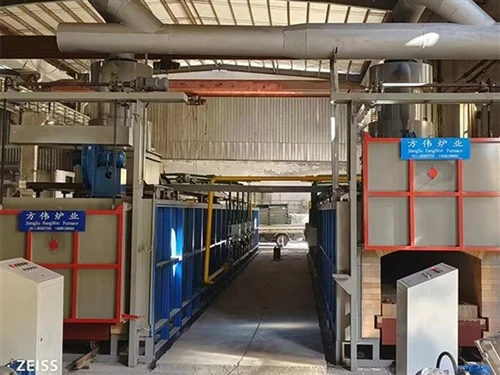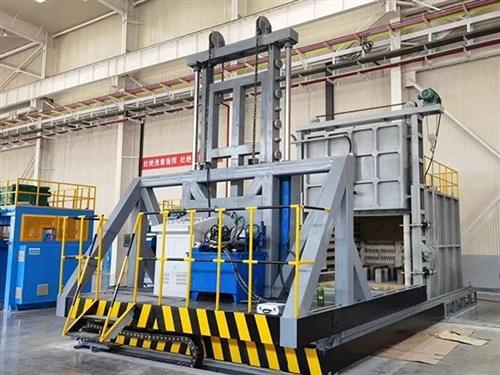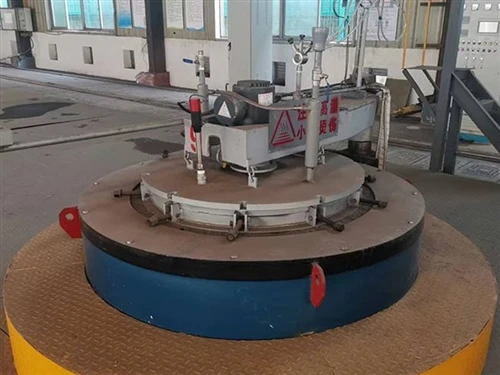
The bogie-hearth furnace is an industrial electric furnace widely used in metal processing, primarily for heat treatment processes such as tempering, annealing, and sintering of metal components. Its core function is to improve the internal structure of metal materials and enhance their mechanical properties and processing stability through precise control of temperature and heating duration. Such equipment plays a vital role in industries including machinery manufacturing, mold processing, and aerospace, serving as a key asset for ensuring the quality of metal products.
Working Principle and Core Structure
The bogie-hearth furnace utilizes resistance heating, converting electrical energy into thermal energy via resistance wires embedded within the furnace chamber. The equipment consists of the furnace body, a bogie (mobile hearth), a heating system, a temperature control system, and a sealing structure. The furnace chamber is lined with refractory materials capable of withstanding temperatures up to 1200°C. The bogie serves as a mobile platform for workpieces, moving in and out of the furnace along rails to facilitate the loading and unloading of large components. The temperature control system employs thermocouples for real-time monitoring and utilizes a PID algorithm to achieve temperature control precision of ±5°C. With chamber dimensions of 1500×750×600mm, it accommodates the simultaneous processing of batches of small-to-medium-sized workpieces.
Technical Parameters and Application Scenarios
The equipment features a rated power of 85,000W and a rated voltage of 380V, with a three-phase power supply design ensuring stable power delivery. The rated temperature range of 1200°C covers most metal heat treatment requirements, including the annealing of carbon and alloy steels and the sintering of cemented carbides. Its bogie-hearth structure makes it particularly suitable for processing irregularly shaped workpieces, such as long shafts and plates; for instance, spheroidizing annealing of mold steel significantly reduces cutting resistance, while tempering gear components eliminates quenching stresses and enhances fatigue resistance. The equipment minimizes heat loss through a sealed design and ensures temperature uniformity within the chamber via circulating fans.
Operational Guidelines and Safety Precautions
Before use, operators must inspect the bogie rails, resistance wire connections, and the status of the temperature control system to ensure there are no abnormalities. Workpieces should be distributed evenly during loading to prevent localized overheating. Opening the furnace door during the heating process is prohibited to avoid sudden temperature drops that could cause workpiece cracking. Operators are required to wear protective gear and remain clear of high-temperature zones. The equipment features over-temperature alarms and power-off protection, automatically cutting off the power supply if the temperature exceeds the set limit or a circuit fault occurs. Routine maintenance includes cleaning carbon deposits from the furnace chamber, inspecting resistance wires for oxidation, and lubricating the bogie rails; a comprehensive overhaul is recommended every 200 hours of operation.
Advantages over conventional furnace models
Compared to box-type resistance furnaces, the bogie-hearth design significantly enhances loading and unloading efficiency, making it particularly suitable for the batch processing of large workpieces. The furnace chamber dimensions can be customized to meet specific requirements, offering greater flexibility. Regarding temperature control, the combination of a three-phase power supply and independent temperature control modules increases heating speed by 30% while reducing energy consumption. Improvements to the sealing structure limit internal temperature fluctuations to within ±5°C-outperforming the industry average-thereby ensuring the technical reliability required for high-precision heat treatment.