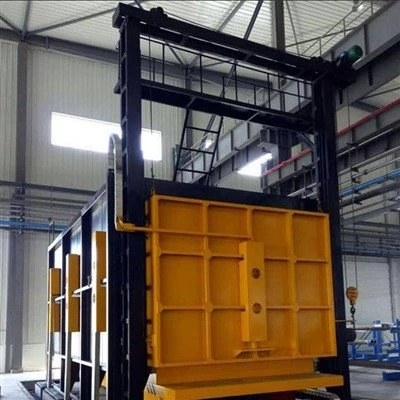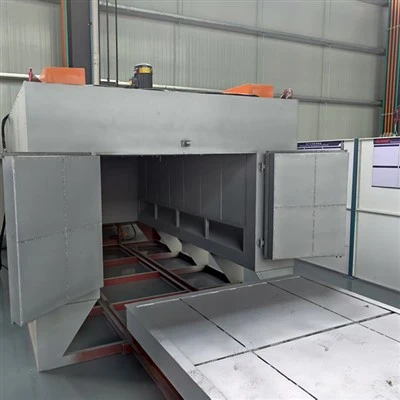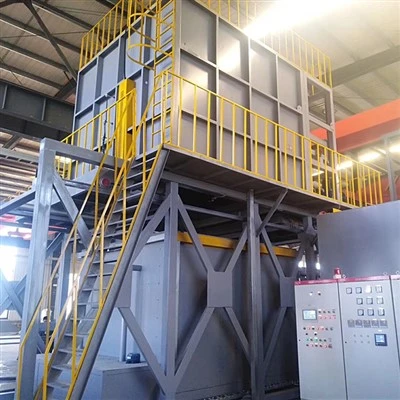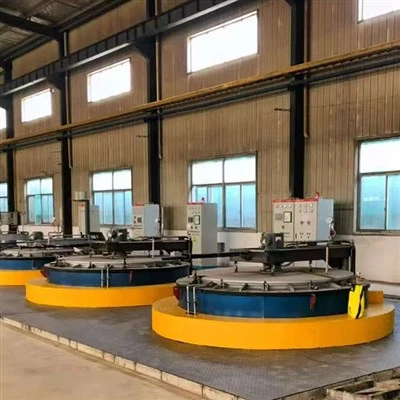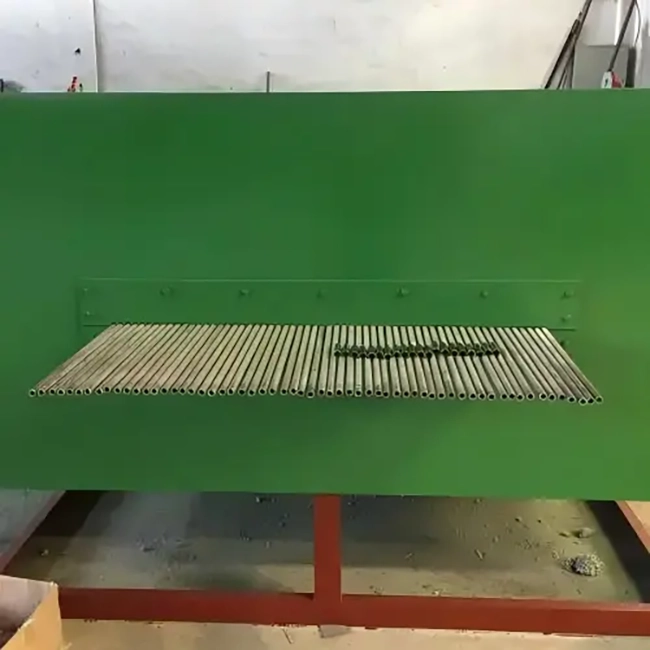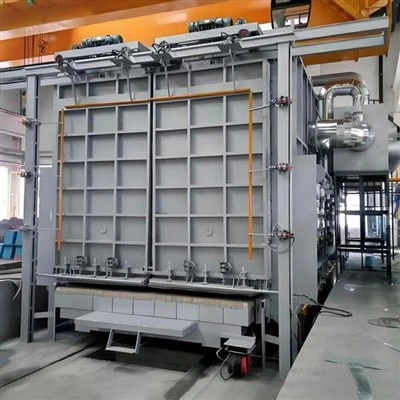
Quenching furnaces are used for the quenching treatment of extruded aluminum alloy products, such as tubes, rods, and profiles. Prior to quenching, the extruded products must be heated uniformly, with a temperature variation of less than ±2.5°C; the quenching process requires a short transfer time, not exceeding 15 seconds.
In the past, extruded aluminum alloy products were treated using nitrate (KNO3) baths. However, as the length of extruded aluminum products increased, this quenching method became obsolete. Currently, vertical quenching furnaces-featuring a quenching tank located directly beneath the furnace-are widely used both domestically and internationally. These furnaces offer the following characteristics:
① Extruded products can be heated uniformly and rapidly prior to quenching;
② The material can be transferred into the quenching tank in the shortest possible time;
③ Bending and twisting deformations caused by the product's own weight and heating are avoided, helping to maintain the product's shape;
④ The mechanical properties of the quenched extruded products are uniform.
A vertical quenching furnace designed by the Non-ferrous Metals Processing Design and Research Institute is suitable for quenching extruded aluminum alloy products; however, it is limited to a maximum material length of 8 meters. It is designed for small- to medium-sized aluminum processing plants and has an annual processing capacity of 1,000 tons. The furnace is divided into five heating zones with a maximum heating power of 300 kW; including auxiliary equipment, the total power is 424 kW.
This quenching furnace is equipped with a forced hot-air circulation system.
Vertical quenching furnaces designed in the Soviet Union also feature internal forced hot-air circulation systems. They are capable of processing large aluminum alloy tubes, rods, and profiles, accommodating material lengths ranging from 4 meters to 20 meters, or even longer.